December 2, 2025

With CTV rapidly becoming one of the most important channels in healthcare marketing, we wanted to dig deeper into what’s changing and what pharma marketers need to know. So we caught up with Nicole Alfonso, Vice President, Media Partnerships at DeepIntent, to talk about all things CTV, from audience precision and real-world data to outcomes and brand safety. Here’s what she shared about where the industry is headed and how brands can make the most of this moment.
1. Upfront season is quickly approaching. How will pharma advertisers approach this year’s upfronts differently?
My hunch is that this year’s Upfronts are going to feel very different overall, but especially for pharma. Pharma buyers are walking into the Upfronts in 2026 with a stronger performance mindset than ever before, not just a TV mindset. We’re moving past the era of “let’s buy a ton of GRPs and hope for the best.” While reach is still very much top of mind, marketers want addressable reach that they can justify, optimize toward, and learn from.
I think there are three key reasons for this shift. The first is that streaming TV is rapidly overtaking linear TV. Across the industry, CTV spend is projected to exceed $40B in 2026, and pharma buyers want guaranteed access to premium streaming inventory at scale. They want the reach of TV, but with more flexibility and more control than linear can offer.
Second, digital is pharma’s growth engine. According to eMarketer, healthcare and pharma digital ad spend is expected to surpass $24 billion in 2025. With 2025 dubbed advertising’s “Outcomes Era,” the pressure is on to prove that media investments drive real-world impact. CTV unlocks something linear simply can’t: the ability to reach providers and patients—and measure real-world results—precisely.
And finally, with DTC rules tightening and more requirements around ad disclosures, brands are more motivated than ever to have a full understanding of where every impression runs.
2. What should pharma marketers prioritize as CTV continues to emerge as a high-growth performance channel?
I recommend two priorities:
#1: Target the providers and consumers who matter, not just broad households.
If you’re paying premium CPMs, you should be paying to reach the right audiences: patients, condition-relevant populations, caregivers, or the specific providers you want to influence.
CTV gives marketers the chance to move beyond broad demographics like “Adults 18+” and instead reach audiences who are genuinely relevant to the brand’s message.
#2: Tie exposure to meaningful outcomes that matter.
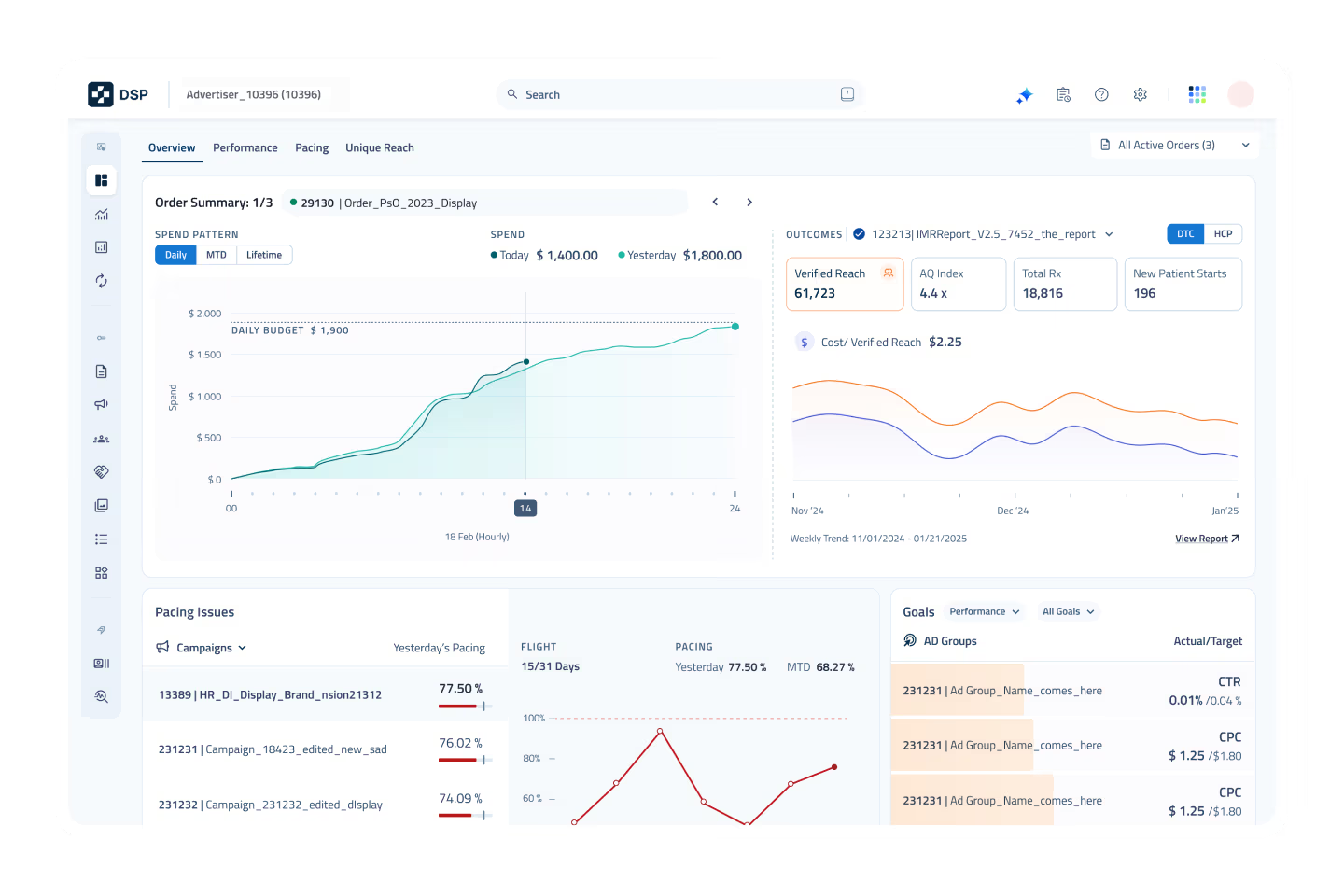
Pharma’s definition of “performance” looks very different from that of e-commerce or traditional digital marketing. Common goals include Audience Quality (AQ), script lift (measured by NBRx or TRx), verified patient or provider reach, and cost per verified patient (CPVP).
But beyond metrics, the true purpose of pharma marketing is to help patients understand their conditions, take more active roles in their care, and have meaningful conversations with their providers. The precision marketing afforded by CTV helps ensure that the most valuable resources compliantly reach the patients who need them most.
3. How is CTV different from traditional TV when it comes to audience targeting and measurement in pharma?
The difference between linear and CTV is genuinely night and day. With linear, you’re buying programs and time slots and hoping the right people happen to be watching. Measurement is broad, directional, and limited.
CTV flips that model. It lets marketers combine storytelling (the power of TV), targeting precision, and measurable performance in a way that aligns with modern patient and provider viewing habits. People are shifting from linear to streaming, and budgets are following.
It comes with its challenges, though. Pharma marketers still have to navigate regulatory scrutiny over DTC advertising, the need for fair balance and risk statements, and fragmentation across CTV supply. But even with these challenges, CTV outperforms linear TV in terms of precision, accountability, and the ability to demonstrate outcomes.
4. What role does real-world health data play in improving audience precision on CTV?
Real-world health data is the secret ingredient that makes CTV targeting so useful to pharma and healthcare marketers. With the help of privacy-safe, HIPAA-compliant, de-identified data cleanrooms, real-world health data allows advertisers to build:
- Predictive cohorts, like caregivers or others who are adjacent to the condition.
- Eligibility-based filters that protect against inappropriate targeting.
- Outcome models that connect exposure to real-world behaviors like diagnosis and adherence.
It moves strategy away from imprecise demographic assumptions and toward actual healthcare patterns, which means fewer wasted impressions and more relevant patient experiences.
5. How can healthcare brands ensure brand safety when advertising on CTV?
It probably goes without saying that establishing airtight brand safety is critical. Beyond compliance, it’s also how brands make sure every dollar is spent responsibly and every patient reached sees an ad in a trustworthy environment. A strong brand-safety strategy on CTV comes down to a few key actions:
- Control your inventory. Work only with partners who provide fully vetted, reputable environments.
- Demand clean, transparent data. Every data provider should be able to clearly explain and identify where those data segments came from, how sensitive categories (e.g., mental health) are handled, and what compliance frameworks they follow.
- Prioritize privacy-first targeting. Make sure vendors can support cohort-based (ID-less) targeting or contextual solutions designed specifically for pharma’s regulatory needs. CTV-specific privacy laws are evolving, and brands need to future-proof their targeting strategies.
- Insist on full verification and transparency. If you can’t see where an ad ran, you can’t defend the buy. Accountability is part of compliance in pharma, so verification tools and transparent reporting should be non-negotiable.
CTV is not replacing linear. Rather, it plays a powerful role in an omnichannel mix. The strongest marketers will recognize this, knowing that CTV is not just “online TV” or “TV 2.0”—it’s a wholly different precision marketing tool. CTV’s potential is only accelerating, and pharma marketers who invest thoughtfully now will be best positioned to lead the industry forward.